
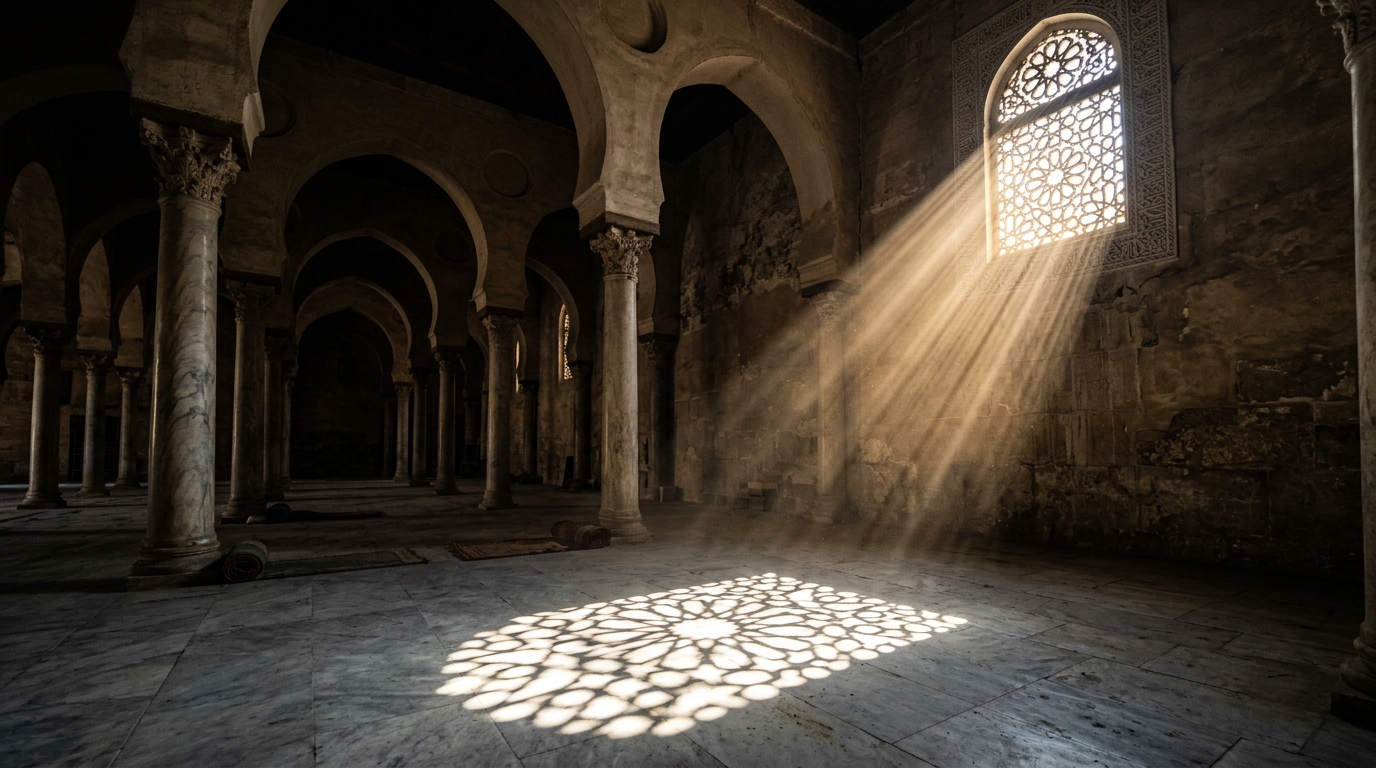
The Historiographical Myth of the "Fatimid Vacuum"
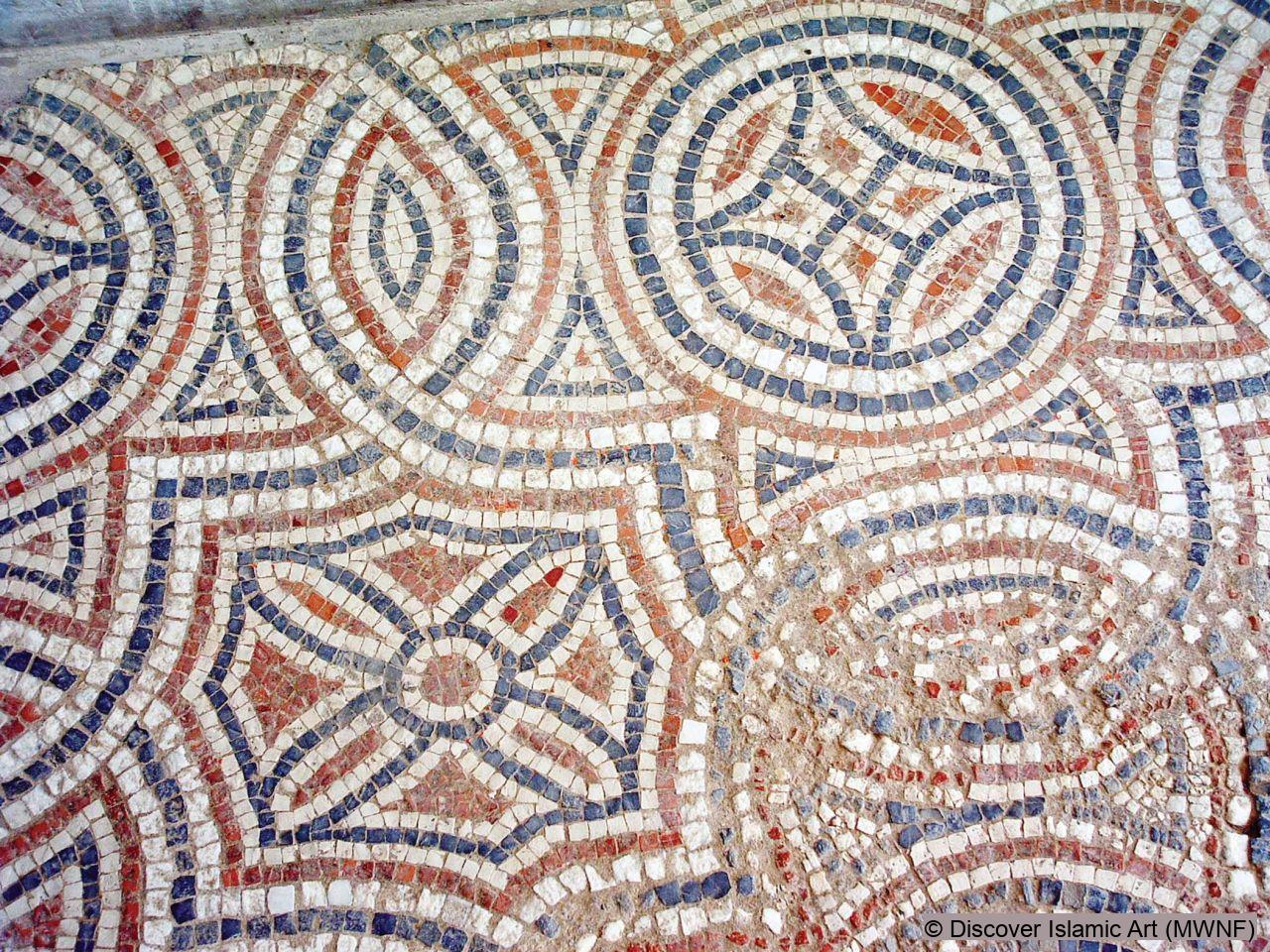
For decades, twentieth-century Western art history manuals repeated a curious assertion: that following the Umayyad glory of the Great Mosque of Damascus (715 CE) and the Dome of the Rock in Jerusalem (691 CE), the craft of Islamic mosaic making entered an abrupt, unexplained hiatus under the Fatimid Caliphate (909–1171 CE). Scholars pointed to Cairo's magnificent stucco inscriptions and carved wooden panels, concluding that stone and glass tessellation had fallen out of architectural favor.
Physical archaeological evidence dismantles this assumption. In 1956, excavations beneath the ruins of the Palace of al-Qa'im at al-Mahdiyya in Tunisia (founded 916 CE / 303 AH) unearthed the only surviving post-Umayyad Islamic floor mosaics in the world, now catalogued at the Raqqada National Museum of Islamic Art (Inv. Mos 001). Featuring intricate geometric rosettes and Solomon's seal interlaces made from locally quarried North African limestone and terracotta, this floor proves that early Fatimid builders inherited, mastered, and actively deployed classical floor tessellation.
The Architectural Leap: From Flat Floors to the 3D Solar-Shadow Engine
When the Fatimid dynasty founded Cairo (al-Qahira) in 969 CE, an extraordinary aesthetic transformation occurred. Rather than confining mosaics to flat walking surfaces or static two-dimensional wall friezes, Fatimid architects integrated their stonework with the radiant solar trajectory of the North African sun.
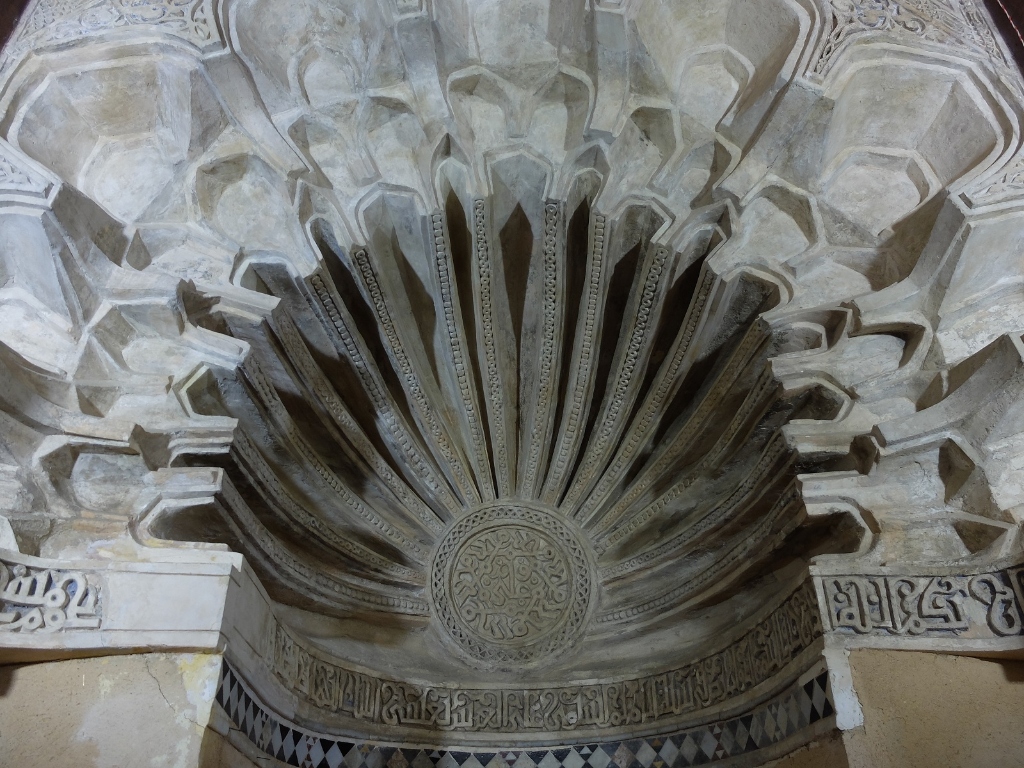
At Al-Jami‘ al-Aqmar (the "Moonlit Mosque", built 1125 CE by Vizier al-Ma'mun al-Bata'ihi), the limestone street façade features a revolutionary fluted keel-arched niche. The niche is carved with twenty-four radiating ribs that emanate from a central pierced medallion inscribed with the names of the Prophet Muhammad and Ali.
This is not decorative ornamentation; it is a calibrated 3D solar-shadow engine. As the morning sun rises at an oblique $25^\circ$ azimuth, each concave rib acts as a physical gnomon. The projecting stone ridges cast deep, crisp shadows into the alternating hollows, creating a shifting chiaroscuro mosaic where the relative luminosity of each cell changes minute by minute without a single drop of artificial pigment.
Applied Optics & Snell's Law: The Mystery of Downward Canting
Concurrently in Fatimid Cairo, the pioneering physicist Ibn al-Haytham (Alhazen, 965–1040 CE) composed his revolutionary seven-volume treatise, Kitab al-Manazir (The Book of Optics), fundamentally dismantling the ancient Greek emission theory of vision and demonstrating that visual perception is formed by light rays entering the eye.
Fatimid mosaicists working on monumental sanctuary domes applied this optical understanding with geometric brilliance. In high dome drums—such as the restored mosaics of the Al-Aqsa Mosque in Jerusalem completed under Fatimid Caliph al-Zahir in 426 AH / 1035 CE—sunlight enters through high clerestory windows at steep downward angles ($\sim 65^\circ$).
If glass smalti cubes with 24-karat gold leaf were set flat against vertical dome walls, specular reflection would bounce the light upward into dark ceiling vaults, leaving the mosaic dull and illegible to worshippers standing forty feet below. Master craftsman Muhammad bin Balawar canted each gold cube downward by $10^\circ ext{ to } 15^\circ$ ($\delta$). Under Snell's law of reflection:
By tilting the reflective tessera downward, the specular ray is redirected downward at an angle of $35^\circ$ to $45^\circ$, directly illuminating the sanctuary floor and creating an ethereal, floating golden radiance for human observers below.
Comparative Architectural Benchmark: Mosaic Traditions Across Millennia
A comparative structural analysis contrasting classical Roman, Umayyad, Fatimid, and modern computational mosaic methodologies:
| Architectural Dimension | Classical Roman & Byzantine | Umayyad (Damascus & Jerusalem) | Fatimid Solar-Shadow Architecture | Modern Computational (Photomosaic.work) |
|---|---|---|---|---|
| Primary Substrate | Flat floor bedding or vertical plaster | Vertical walls, squinches & vaults | 3D fluted stone ribs & pierced grilles | Client GPU memory buffer (WebGL2) |
| Light Source Mechanics | Static ambient daylight & oil lamps | Specular reflections from flat smalti | Dynamic solar gnomon & projected rays | Perceptual CIELAB ΔE matching |
| Tessellation Motion | Static (fixed positions) | Static gilded sparkle | Living Chiaroscuro: shadow tiles migrate hourly | Sub-1.5s real-time WebSocket animation |
| Spatial Subdivision | Uniform square tesserae | Variable smalti sizing | Multi-scale stone masonry + pierced voids | Recursive Quadtree (24px to 125px) |
| Color Authenticity | Natural stone & colored glass | Gold leaf & semi-precious stone | Pure stone texture (0% artificial wash) | 0% Fake Tint Wash (100% photo texture) |
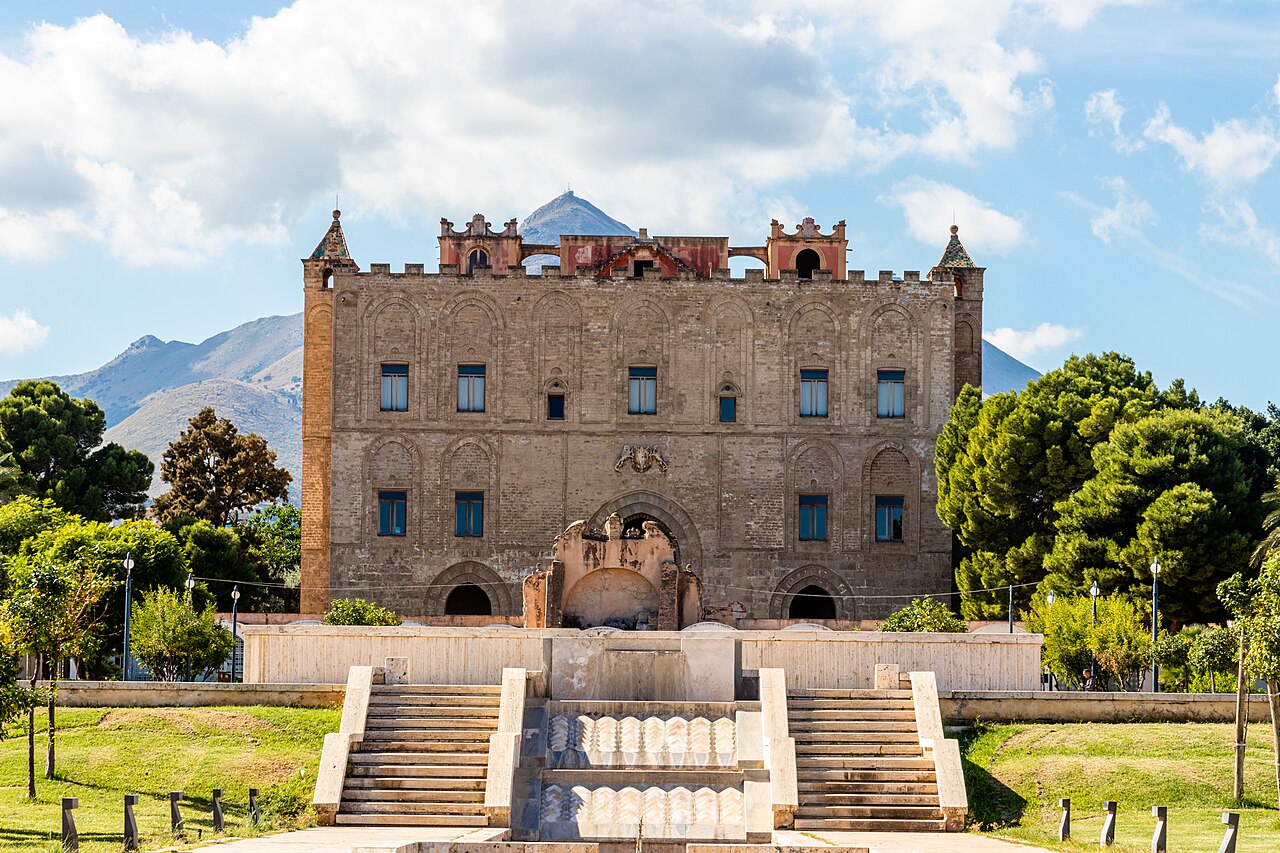
The Trans-Mediterranean Legacy: Arab-Norman Sicily
When the Fatimid political state dissolved in 1171 CE, their architectural and optical techniques did not vanish. During the reign of King Roger II and William I in twelfth-century Sicily, the royal Norman court enthusiastically commissioned Fatimid master artisans to design their palaces and royal chapels in Palermo.
At the Castello della Zisa (1165 CE, derived from the Arabic al-Aziza, "The Splendid"), Fatimid craftsmen integrated indoor fountains with golden glass mosaic friezes and stalactite muqarnas vaults. The gentle sound of running spring water combined with specular golden tesserae reflections created an insulated microclimate that blended Islamic thermodynamic engineering with Byzantine-Roman gilded luxury.
From Medieval Light Engines to Modern WebGL2 Photomosaics
Today, the core principles pioneered by Fatimid architects and Ibn al-Haytham remain foundational to modern digital imaging and generative art:
- Multi-Scale Stone Sizing → Recursive Quadtree Partitioning: Just as Fatimid masons used smaller stones to articulate delicate eyes and calligraphic ascenders while using broader slabs for background surfaces, modern algorithms recursively subdivide high-entropy facial zones into 24px micro-tiles while keeping smooth backgrounds in 96px macro-tiles.
- Natural Mineral Pigments → 0% Fake Color Overlay: Authentic mosaics rely on the inherent hue of the stone. On Photomosaic.work, our engine matches thousands of photos using true CIELAB ΔE perceptual color science, refusing to apply artificial transparent color washes that ruin photo clarity.
- Dynamic Light Projection → WebAR Living Posters: What Fatimid pierced grilles achieved with shifting morning sunlight, modern augmented reality achieves through mobile optical sensors. By holding a smartphone to a framed canvas via Aameeq WebAR, the physical print dissolves into living motion video vows or historical speeches.